Economic Watch: Traditional lantern lights up China's night economy

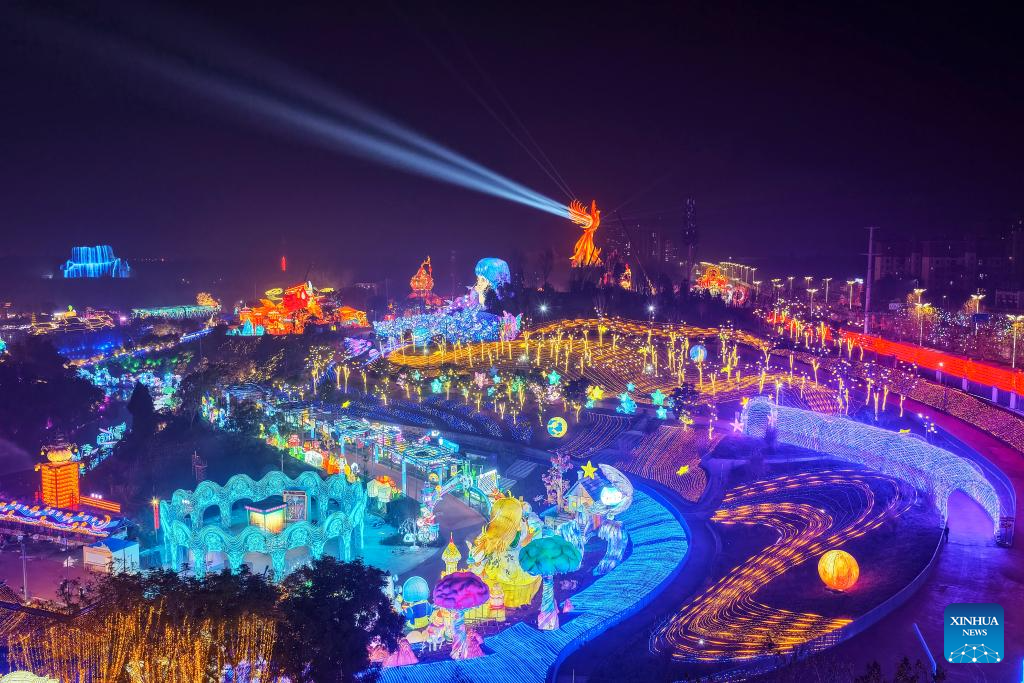
This photo taken on May 14, 2026 shows a view of the Zigong China Lantern World in Zigong, southwest China's Sichuan Province. (Xinhua)
CHENGDU, May 18 (Xinhua) -- As dusk settled, Zigong China Lantern World in the city of Zigong, southwest China's Sichuan Province, came alive at what is a peak time at this venue. Thousands of lanterns flickered on, one after another, with the laughter of visitors and dazzling displays of light merging into a vibrant glow that illuminated the city skyline.
On Friday, such a nocturnal wonder formed part of the conclusion of the 2026 Zigong Lantern Trade Conference, during which contracts worth nearly 1.03 billion yuan (about 150.55 million U.S. dollars) were signed.
In this ancient city, 800-year-old lantern-making craftsmanship has evolved from a traditional festive custom into a billion-yuan-scale industrial cluster.
The thriving industry has earned Zigong the reputation of being "China's Lantern City," while also highlighting a new path for the country's booming night economy.
For local residents, admiring lanterns has long been part of everyday nightlife. Taking an evening stroll after dinner beneath glowing lantern displays is a familiar activity in Zigong. Yet the city's rise to prominence as "China's Lantern City" did not happen overnight.
"In the early days, lanterns featured simple designs and served limited purposes, appearing only briefly during festivals and holidays," said Shen Hongyue, president of the Zigong Lantern Industry Association.
It was only after decades of development that Zigong managed to build a complete industrial chain integrating design, research and development, production and operations, Shen recalled, adding that the city now accounts for 85 percent of China's lantern market and 92 percent of the global market, with annual revenue across the entire industrial chain surpassing 8 billion yuan.
This well-developed industrial ecosystem has positioned Zigong lanterns very effectively, allowing the city to capitalize on China's rapidly expanding night economy.
Across the country, notably, cities are introducing new consumption scenarios to stimulate domestic demand, thereby fueling the rapid growth of nighttime tourism.
In northwest China's Xi'an, the lantern-lit streets of Datang Everbright City, a major tourism attraction based on the city's historical landscape, draw crowds seeking immersive cultural experiences.
In central China's Changsha, the bustling Wuyi commercial district remains packed with Gen-Z tourists enjoying local snacks and lifestyles, while light-and-performance attractions at amusement parks in east China's Wuhu are gaining steam as venues for family evening outings.
Against this backdrop, Zigong lantern companies are moving beyond their role as traditional lantern fair suppliers. By continuously rolling out innovative products tailored to younger and trend-conscious consumers, they are adapting the centuries-old craft to a new generation of nighttime consumption scenarios.
At the 2026 Zigong Lantern Trade Conference, a range of such new products captured visitors' attention.
"We've been focusing on younger consumers and trend-driven markets, constantly exploring new ideas and expanding the application scenarios of lantern-making techniques," said Wang Bo, deputy general manager of Hualong Technology, while holding a lantern shaped like a dinosaur.
"We helped create the stage lighting and signature props for a concert featuring a popular Taiwan band," he said, adding that the little dinosaur lantern he was holding was identical to the one used in this show.
Wang's approach reflects a broader trend across Zigong's lantern industry. Data reveal that the 31st Zigong International Dinosaur Lantern Festival in 2025 had attracted over 2.08 million visits, setting a new record for the event.
Meanwhile, many lantern companies are turning to culture-themed projects to stand out via distinctive experiences.
"We combine traditional cultural elements with modern lighting technologies to create signature projects tailored to the urban night economy," said Su Bengang, head of Tengda Lanterns, while pointing to photos of the Jingcai lantern festival at Beijing Garden Expo Park.
Since its launch, this festival has attracted millions of visitors, offering a successful model for cities across China seeking to upgrade nighttime tourism and invigorate their local economies, Su said.
At the national level, China is expanding the supply of high-quality products and new consumption scenarios to meet increasingly diverse consumer demand and support sustainable economic growth.
The outline of the country's 15th Five-Year Plan, released in March, calls for expanding cultural, sports and tourism consumption while creating immersive and interactive consumption experiences to unlock the potential of the service sector.
In Shen's view, industrial transformation and upgrading will remain central to the lantern industry's ability to drive consumption growth.
"The industry has evolved from simply supplying lantern products to providing integrated services for nighttime cultural tourism projects, and is now steadily becoming part of new nighttime tourism and consumption scenarios across China," he said. ■

A staff member makes a lantern at the workshop of a lantern company in Zigong, southwest China's Sichuan Province, May 14, 2026. (Xinhua/Xiao Yue)
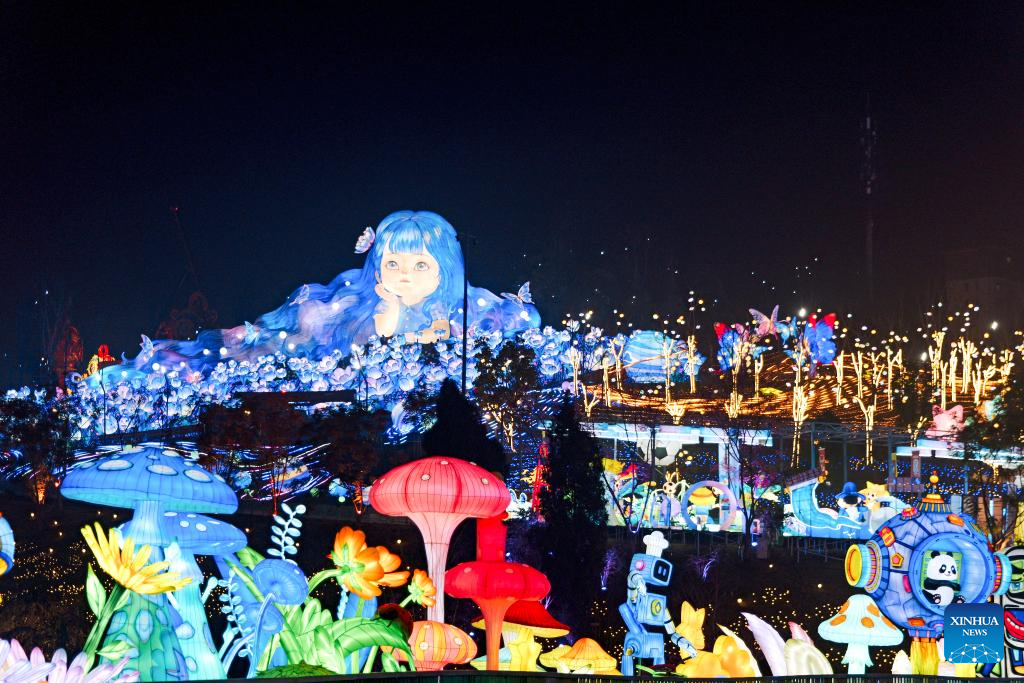
This photo taken on May 14, 2026 shows a view of the Zigong China Lantern World in Zigong, southwest China's Sichuan Province. (Xinhua)

This photo taken on May 14, 2026 shows a view at the 32nd Zigong International Dinosaur Lantern Festival in Zigong, southwest China's Sichuan Province. (Xinhua)


